For educators
Help them build
what's possible.
Give your students practical experiences in entrepreneurship, financial literacy, communication, leadership, resilience, and real-world problem-solving.
Our philosophy
You know your students.
We bring the framework.
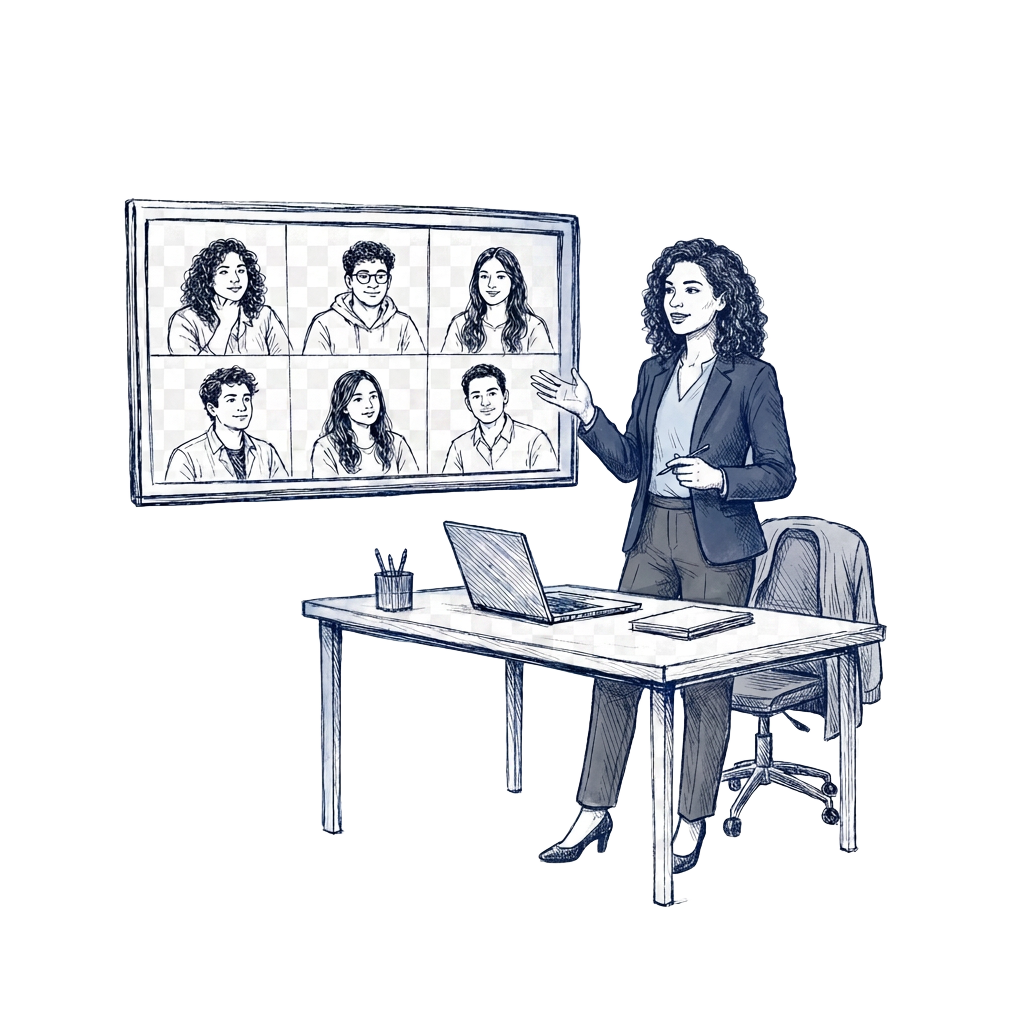
WC doesn't replace what happens in your classroom — it gives it a new outlet. You bring the relationships, the context, and the trust. We bring a structure that turns that trust into attempts, experiments, and growth you can see.
What WC provides
Everything you need
to run it well.
CURRICULUM
A sequenced, ready-to-run experiential program — sessions, prompts, and project arcs you can teach from on day one.
TRAINING
Facilitator development that prepares you to run experiential learning, hold space for failure, and coach student ventures.
TOOLS
Worksheets, canvases, rubrics, and reflection instruments designed for real classrooms and real constraints.
EXPERIENCES
Pitches, market days, and build sessions — structured moments where students test their ideas against reality.
COMMUNITY
A network of educators comparing notes across schools, contexts, and countries as the practice develops.
The capability framework
What your students
walk away with.
Every session, tool, and project maps to one of four capabilities — so growth is visible, nameable, and trackable.
BUILD
Turn ideas into action.
- Entrepreneurship
- Problem-solving
- Creativity
- Execution
LEAD
Bring people with you.
- Communication
- Collaboration
- Leadership
- Confidence
NAVIGATE
Understand the world you're operating in.
- Financial literacy
- Decision-making
- Planning
- Resourcefulness
RISE
Keep moving when things don't go as planned.
- Resilience
- Self-awareness
- Well-being
- Learning through failure
How the curriculum works
Experiential,
not lecture-based.
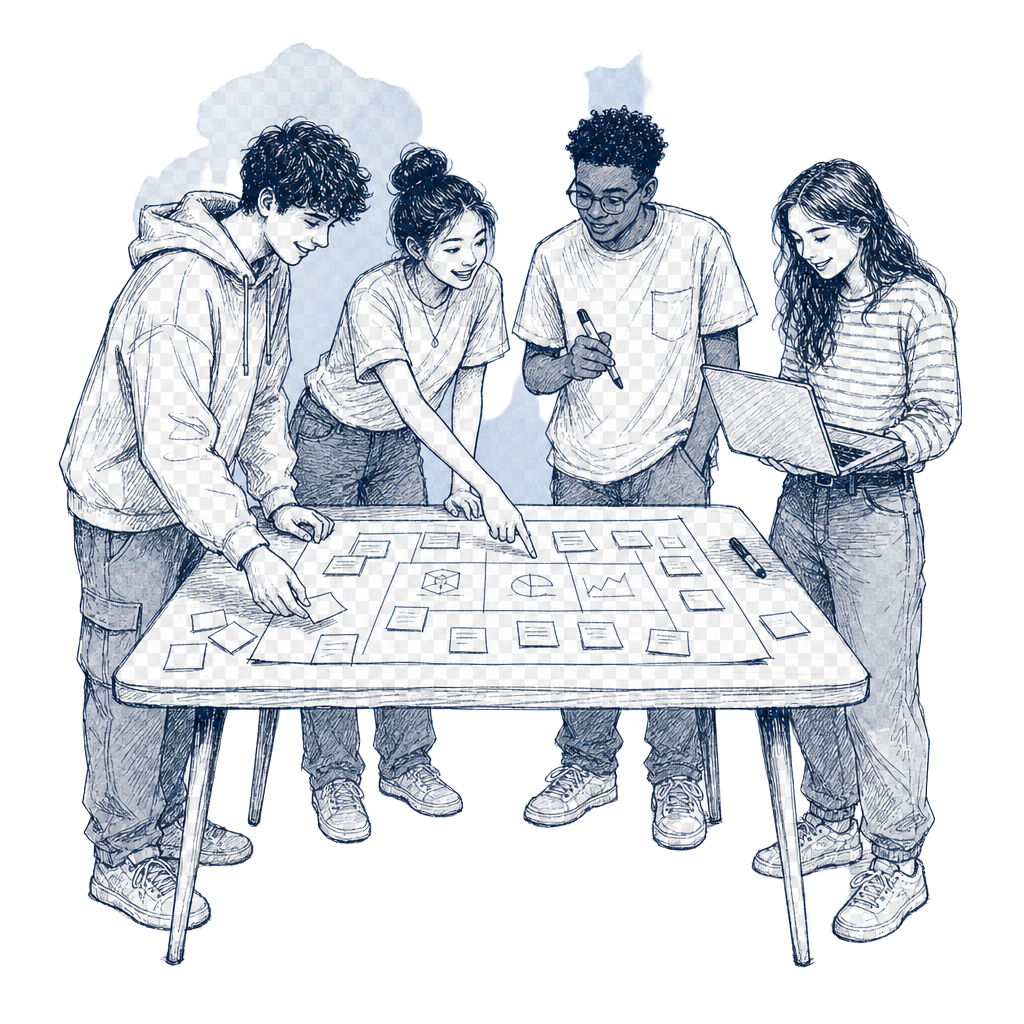
Students learn the framework, then immediately use it on something of their own. Concepts stick because they're attached to real attempts — not because they were memorized for a test.
Less of
- Lectures about business
- Hypothetical case studies
- Grades as the finish line
More of
- Students building real things
- Ideas tested against reality
- Reflection on what actually happened
Why failure matters
Your classroom can be
the safest place
to fail.
Most young people only experiment where the stakes are already high. WC flips that: it builds structured, low-cost attempts into the learning itself, so students can miss, adapt, and retry while the price of failure is still small.
As the facilitator, you set the tone. We'll show you how to make "that didn't work — what did we learn?" a normal, expected part of the room.
Students who learn to fail well learn to attempt more.
Who it's for
If young people
trust you, this
is for you.
- Teachers
- School leaders
- Youth organizations
- Community educators
- Mentors
On the roadmap: a formal WC facilitator certification for educators who want to go deeper. We'll share details when it's ready.